40 - Mechanism vs policy
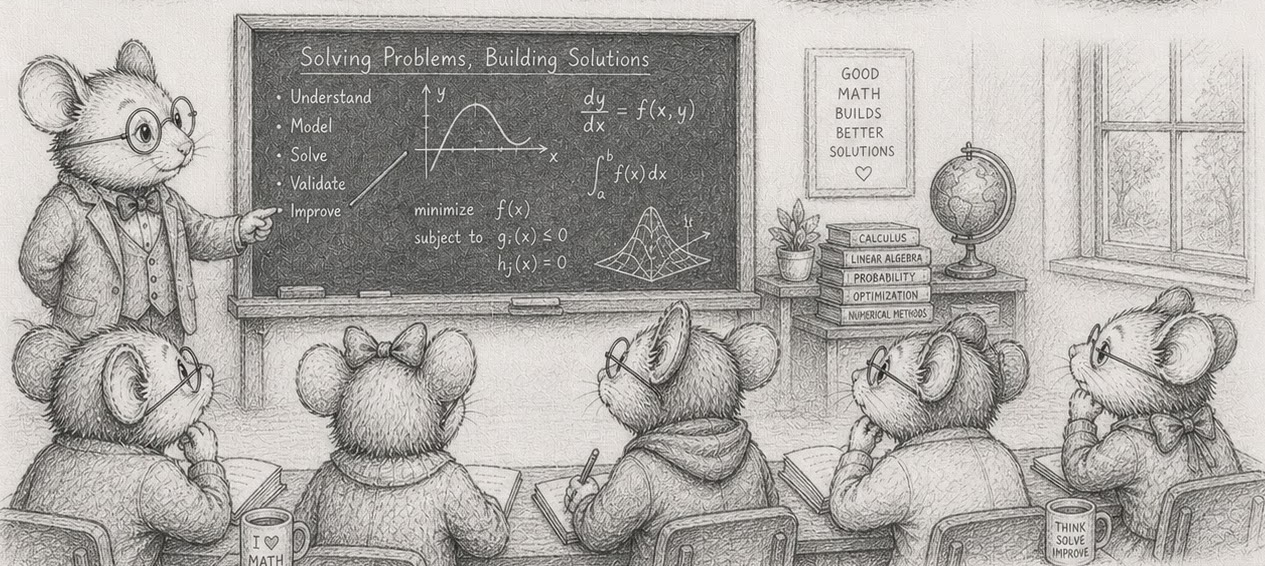
Concept node: see the DAG and glossary entry 40.
|
Note - Building it to last. Sections 1-39 made the simulator work - deterministic, scaled, parallel, persisted. These four chapters make it last. They are still act one - building - but they answer the questions you ask of a thing you intend to keep: is it extendible (can it grow without a rewrite), is it maintainable (can someone who is not you change it safely), and does it hold its performance and its memory as it grows. Mechanism vs policy, deferred abstraction, dependency pricing, and tests-are-systems are the discipline for those four. The fifth question - can you operate it in service, with nobody watching - is the second act, and it opens at §45. Mechanism vs policy is where the discipline starts: a kernel you can keep is a kernel whose rules can change without it. |
The kernel of a system exposes verbs. The rules - what’s allowed, what triggers what - live at the edges. Confusing the two is how systems calcify; once a kernel knows about a rule, the rule cannot change without rewriting the kernel.
The principle is older than ECS. It is named in operating-system kernel design (Mach, X11, Plan 9 all teach this rule), in network-protocol design (TCP is mechanism, congestion control is policy), and in file-system design (read/write/seek is mechanism, access control is policy). The same shape applies to ECS systems.
In the simulator:
cleanupis mechanism. It takesto_removeandto_insert, applies them viaswap_removeandpush, and updatesid_to_slot. It has no opinion about which creatures should be removed or why. It just commits the changes its callers asked for.apply_starveis policy. It readscreature.energyand pushes ids of creatures withenergy <= 0toto_remove. The rule “creatures die when energy reaches zero” lives here. Change the rule toenergy < -10orenergy < threshold for 100 ticksand onlyapply_starvechanges; cleanup stays the same.
The separation pays off in three places.
Replaceable rules. A new gameplay variant - “creatures don’t die, they hibernate” - is a new policy on top of unchanged mechanism. apply_starve becomes apply_hibernate; cleanup still works because cleanup does not know what these systems are doing. The kernel is stable; rules are mobile.
Composable rules. Two policies acting on the same kernel compose: one system marks “expired” creatures, another marks “predated” creatures. Both push to to_remove. Cleanup applies both batches without knowing why either was set.
Testable rules. A test fixture sets up to_remove and to_insert directly, runs cleanup alone, and asserts on the result. The mechanism is testable in isolation. Each policy’s test fixture sets up creatures and asserts on what the policy pushes to the buffer. Mechanism tests and policy tests don’t need each other.
The anti-pattern: a food_spawn that mutates food directly:
fn food_spawn(food: &mut Vec<Food>, /* ... */) {
    if some_condition {
        food.push(/* ... */); // BUG: bypasses to_insert
    }
}
Now food_spawn is doing both the deciding (when food appears) and the committing (writing to food). Two changes need rewriting it: a new spawn rule (policy change) and a new cleanup mechanism (mechanism change). They have become the same change. The kernel is married to its current rule.
The fix is to push to to_insert instead, letting cleanup commit. The two roles are separable because they were designed to be - through the buffering pattern from §22, which is itself a mechanism-vs-policy separation. The mechanism is “apply changes at the boundary”; the policy is “what changes to apply”.
Mechanism vs policy is therefore not a separate discipline. It is the rule that every previous chapter has been respecting implicitly. Naming it makes it visible.
Exercises
- Find the mechanism. For each system in your simulator (motion, food_spawn, next_event, apply_eat, apply_reproduce, apply_starve, cleanup, inspect), classify: is this mechanism (committing what something else asked for), policy (deciding what to ask for), or both? Note where each role lives.
- Replace a policy. Change
apply_starve’s rule fromenergy <= 0toenergy < -10 && age > 100. Confirm: onlyapply_starvechanges;cleanupstays untouched. - Add a new policy on the same mechanism. Write a new system
apply_predationthat pushes ids of “predated” creatures (some other rule) toto_remove. The two policies’ outputs both flow to cleanup, which applies them without distinction. - Spot the anti-pattern. Find any place in your simulator where a system writes directly to a “live” table instead of to
to_insertorto_remove. Refactor. - (stretch) A second mechanism. Suppose you want a “soft delete” - creatures move to a
deadtable instead of being removed. Implement a new mechanism (cleanup_with_archive) without touching the existing policies. The sameto_removeids; different mechanism applied. Switch between them by swapping the system in the DAG, not by editing the systems that produce the data.
Reference notes in 40_mechanism_vs_policy_solutions.md.
What’s next
§41 - Deferred abstraction is the discipline for writing the kernel-and-policies in the first place: write three concrete cases before extracting any abstraction.