9 - Sort breaks indices
Concept node: see the DAG and glossary entry 9.
In §5 - Identity is an integer, exercise 10 left you with a bug. Player 1 was holding the index list [3, 17, 21, 28, 41]. The dealer sorted the deck columns by suit. Player 1’s hand was now wrong - the same indices, the same slots, but different cards.
That bug is the structural fact this section names. Sorting did not damage anything; the player’s reference was never robust to begin with. An index points at a slot, not at a thing. When the slot’s contents change, the index quietly changes meaning.
It is not only sorting. Any rearrangement does it: swap_remove (a O(1) deletion that moves the last row into the freed slot, coming in §21), reshuffling for locality (§28), compacting after a batch of deletions. The same index, the same array, the same line of code, now means a different card.
This is uncomfortable. In OOP you held a Card reference and the card stayed put because Card was a thing. In data-oriented code the card is the slot, and the slot does not have permanent meaning. The card you saved a reference to yesterday may be a different card today, if the deck has been touched.
There are two ways forward. The lazy one is to never rearrange the deck. That works for fifty-two cards, fails for ten thousand creatures, and becomes catastrophic for a million. The book is going to need rearrangements - sorting, deletion, compaction - at every scale beyond §0. So we need the other fix: a stable name that survives the slot it currently occupies.
That is what §10 - Stable IDs and generations does. This section’s only job is to make the slot vs name distinction concrete enough that §10’s solution feels inevitable rather than ceremonial.
|
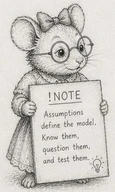
Note - Why feel the pain first? Because the fix in §10 is small - one extra column - and small fixes only stick if the student knows what they fix. Reading “always store an id” without first feeling the bug produces students who add ids cargo-culted, then drop them when the codebase looks too cluttered. Reading it after watching player 1 lose their hand produces students who never drop them. |
Exercises
You should still have your src/main.rs from §5. These exercises extend it.
- Reproduce the bug. With player 1 holding
[3, 17, 21, 28, 41], sort the deck columns themselves (suits,ranks, andlocationsin lockstep) by suit. Print player 1’s hand usingcard_to_string. Confirm the cards have changed. - A second rearrangement. Instead of sorting, swap two cards’ positions:
Print player 1’s hand again. Same bug shape, different cause.#![allow(unused)] fn main() { suits.swap(3, 17); ranks.swap(3, 17); locations.swap(3, 17); } - A third rearrangement. Remove the card at slot 3 with
swap_remove(3)on each column. Print player 1’s hand. Note that the cards at slots[17, 21, 28, 41]are unchanged but slot 3 may now hold what was previously the last card; meanwhile slot 51 has silently been deleted. - Quantify the breakage. Write a function that takes the original
[3, 17, 21, 28, 41]plus a freshly built deck, applies a Fisher-Yates shuffle to the deck columns themselves, and counts how many of the five references still point at the same(suit, rank)value. Run it 100 times. Roughly what fraction of references survive a random shuffle of the deck? - A reference that can survive. Without writing any new code - on paper - describe what kind of reference would survive a shuffle. (Hint: you already know. The card’s
(suit, rank)is unique to that card. The reference that survives is the one that does not depend on the slot.) - (stretch) The cost of never rearranging. Suppose you decide to never sort, swap, or remove from the deck columns, to avoid this bug forever. How would shuffling work? How would discarding a card work? Why does this not scale to ten thousand creatures?
Reference notes for these exercises in 09_sort_breaks_indices_solutions.md.
What’s next
Exercise 5 points at the answer; exercise 6 makes the never-rearrange option look bad. The real fix is to store identity separately from position - an id column that travels with the row across rearrangements, with a generation counter on top for variable-quantity tables. §10 - Stable IDs and generations builds it.